
Equestrian Eventing Surface Analysis & Going Consultation
In high-level eventing, footing is not guesswork – it is measurable. Boekholder & Associates provides objective, data-driven Going analysis using the only Vienna Surface Testing (VST) unit currently operating in the United States for Three Day Eventing venues. Our structured course evaluation protocol helps eventing venues dial in surface performance well before competition day, reducing variability and supporting both horse welfare and competitive integrity.
Surface Consistency Is Critical in Eventing Performance & Safety
In eventing, footing is not a cosmetic detail – it is a performance variable.
Horses gallop, collect, extend, and land under significant dynamic load. Subtle variations in surface firmness, depth, and energy return can influence stride efficiency, traction, fatigue, and concussion forces. When surface characteristics vary across a course, the risk profile changes from obstacle to obstacle.
Historically, surface evaluation has relied on visual inspection, manual probing, and subjective experience. While experience is valuable, it does not quantify mechanical response under load.
Objective surface measurement removes assumptions. It replaces perception with defensible data – allowing course managers and event organizers to make informed, proactive decisions rather than reactive adjustments.
Inconsistent Going conditions contribute to:
Uneven load distribution through limbs
Reduced traction in takeoff or landing zones
Excessive surface compaction and concussion
Increased muscular fatigue
Variability in performance outcomes
At the competition level, consistency is not optional. It is foundational to horse welfare, rider confidence, and the credibility of the event itself.
Objective Surface Performance Measurement Using the Vienna Surface Testing (VST) Unit
In order to manage surface performance, it must first be measured accurately. As the only firm currently operating a Vienna Surface Testing unit in the United States, Boekholder & Associates provides a level of surface analysis not otherwise available domestically.
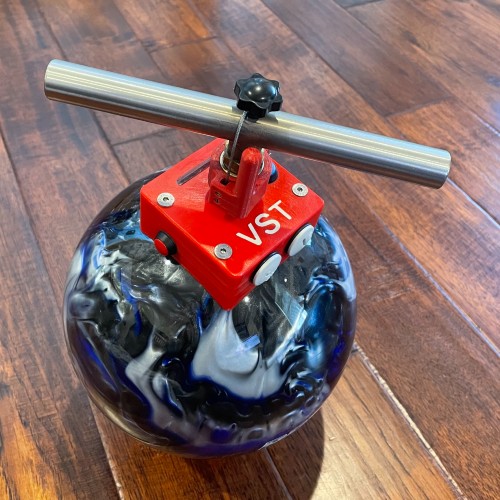
The Vienna Surface Testing (VST) unit is a highly specialized diagnostic system widely recognized in the United Kingdom and Europe as the industry standard for evaluating eventing course conditions. The VST provides quantifiable, repeatable measurements of surface behavior under load, allowing for informed and defensible decision-making.
Unlike visual inspections or manual probing methods, the VST evaluates how the surface responds dynamically – replicating the mechanical forces experienced during competition.
What the VST Measures
The VST system captures multiple critical performance variables, including:
Course cushioning – the surface’s ability to absorb impact forces
Surface firmness – resistance to penetration and compaction
Depth consistency – uniformity of the active playing layer
Energy return – how efficiently force is returned during stride
Ground stiffness – mechanical resistance characteristics under dynamic load
These measurements create a comprehensive performance profile of the course – identifying variability between sections, approaches, landings, and high-traffic zones.
Why This Matters
Quantified data enables proactive surface management.
By identifying measurable differences in firmness, depth, or energy return across a course footprint, adjustments can be targeted precisely where needed, rather than applied uniformly across the entire property.
This results in:
Improved surface consistency
Reduced guesswork
Documented surface conditions
Increased transparency for organizers and stakeholders
At the highest levels of competition, objective measurement provides a defensible foundation for surface management decisions.
A Measured Approach to Dialing in Event-Ready Going
Surface consistency cannot be achieved through last-minute adjustments alone. Meaningful improvement requires time, data, and a structured response cycle.
Boekholder & Associates implements a customized evaluation protocol designed to measure, adjust, and verify surface conditions leading up to competition day. Typically a phased approach, it allows facility managers and event organizers to make informed corrections with adequate response time – reducing variability across the course footprint.
Phase 1 – Baseline Evaluation (One Month Prior)
The initial visit establishes a comprehensive performance profile of the course.
Using the Vienna Surface Testing (VST) unit, we identify variations in cushioning, firmness, depth, and energy return as an average across the entire course.
Following data collection, targeted recommendations are provided. These may include adjustments to aeration strategy, rolling practices, irrigation timing, or topdressing applications.
The objective at this stage is early identification and correction – not reaction.
Phase 2 – Follow-Up & Adjustment Verification (One Week Prior)
The second evaluation assesses the surface’s response to implemented corrections.
Repeat testing determines whether previous adjustments have improved uniformity and whether additional refinement is required. Because surface performance can evolve based on weather conditions, traffic patterns, and moisture levels, this phase ensures the course continues trending toward optimal consistency.
This stage reduces the risk of surprises as competition approaches.
Phase 3 – Final Verification (One Day Prior)
The final visit confirms readiness.
Surface measurements are repeated to verify consistency across the entire course footprint. Any minor variability can be addressed with precision rather than broad, disruptive intervention.
At this point, the goal is validation – ensuring that surface conditions align with intended performance standards prior to competition. We strive to create the most consistent surface possible for both horse and rider.
From Measurement to Managed Surface Performance
Surface testing is only valuable when it informs decision-making.
The data collected through the Vienna Surface Testing (VST) system is translated into targeted, site-specific surface management strategies. Rather than applying uniform treatments across an entire course, Boekholder & Associates identifies specific zones requiring adjustment, ensuring interventions are precise, efficient, and measurable.
Aeration Strategy Refinement
Adjusting tine depth, pattern, or frequency in areas showing elevated stiffness or compaction.
Rolling Modifications
Reducing or redistributing rolling intensity where excessive firmness or density is detected.
Irrigation Management
Fine-tuning timing and application rates to address moisture variability and surface response.
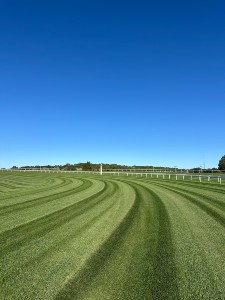
Topdressing Adjustments
Modifying material distribution in areas where depth inconsistencies are observed.
Compaction Management
Targeting high-traffic corridors, takeoff zones, and landing areas where mechanical stress is concentrated.
Data-driven adjustments reduce guesswork, support horse welfare, and reinforce the credibility of the event environment.
Ensure Your Course Is Competition-Ready
Event-ready footing does not happen by chance. It is measured, managed, and verified.
Boekholder & Associates provides structured surface evaluation and data-driven consultation to help event organizers and facility operators deliver consistent, competition-ready conditions. Whether preparing for a recognized event or seeking long-term surface performance improvement, our approach is grounded in measurable standards and documented methodology.
Objective surface testing supports horse welfare, rider confidence, and the overall integrity of the competition environment.